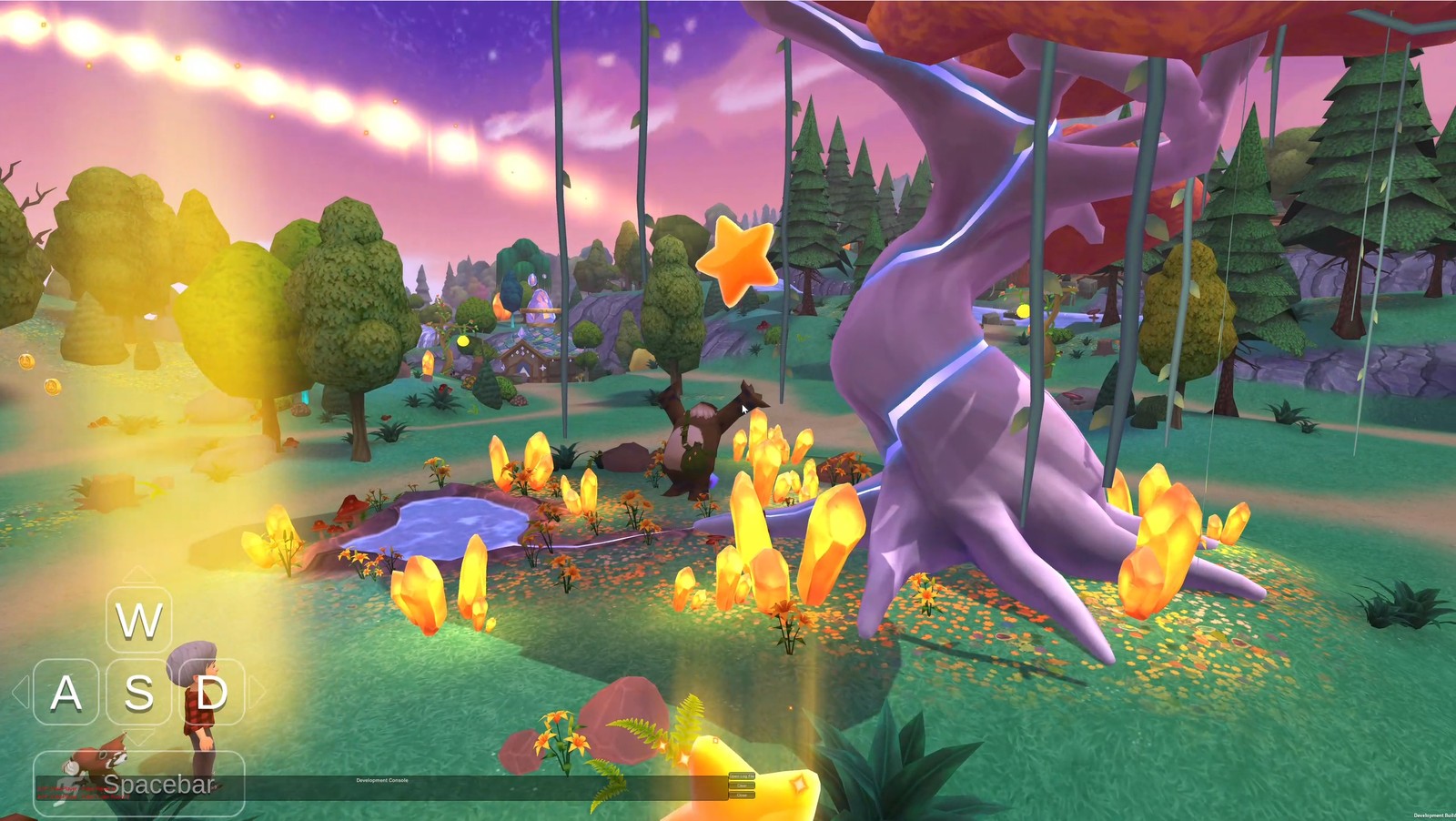
Intellipet Adventures
Adventure Academy
Principal Game Designer, Age of Learning
Timeline: Approximate: an estimated 8 months from concept to release in 2022
Platform: PC, Mac, Android, and iOS
Audience: Primary: children roughly grades 2 through 5, transitioning from ABCMouse, Age of Learning's earlier and most popular product for younger kids. Secondary: parents.
Summary
- Pitched and helped design Intellipet Adventures, the largest single expansion released for Adventure Academy, born out of years of internal frustration that the game's education content lived entirely inside an isolated kiosk UI, disconnected from the 3D social overworld around it.
- Solved a long-requested player ask, a real jump, blocked for years by navmesh-locked avatars and multiplayer sync limits. That technical opening became the seed for a brand-new zone with real 3D physics, and design used it to finally bring education into the core gameplay loop instead of a separate kiosk.
- After months of brainstorming, the team landed on a Pokemon-inspired pet battler: players collect and battle "Intellipets," answering subject-matter trivia to fuel their attacks, wrapped in the game's first real story, recovering scattered stars and restoring a magical tree after the game's antagonist attempts to steal its power.
- Owned final level design, quest design, and NPC dialogue for the zone's first land (50 quests, 3 side-quest branches). Shipped with a 9% D1 retention lift in A/B testing.
Problem & Opportunity
For years, Adventure Academy's educational content lived inside a kiosk within the game's 3D social world. Visiting it meant walking your avatar up to a kiosk and disappearing into a separate mini-game that never used your avatar at all, a jarring disconnect between the world you'd just left and the "pocket world" you dropped into. Kids were nominally incentivized to engage with kiosk content through coins and XP tied to character customization and area unlocks, but design knew it was a bottleneck. Seasoned, older players avoided it, gravitating instead toward the parts of the game that had nothing to do with the curriculum: socializing, clubs, and a newly introduced pet system that turned out to be a huge draw.

The kiosk itself: a full-screen menu of games sorted by subject, with no connection to the 3D world or the player's own avatar just outside it.
Meanwhile, one request showed up in player feedback constantly: a real jump. Avatars were locked to a navmesh to prevent players from getting stuck or clipping through the map, and the game's multiplayer sync couldn't handle 30-plus players moving with real physics in a single instance on all the required platforms, particularly Android mobile devices. It was a hard technical wall.
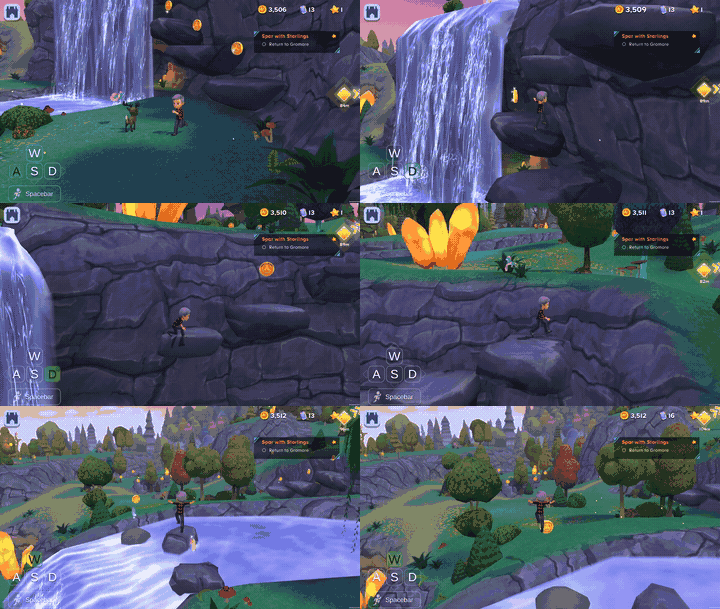
The real jump, shipped: platforming across ledges in the Astralands, something no other zone in the game could do.
The opportunity came from an unexpected direction: a networking engineer proposed a new zone built on a different matchmaking and instancing approach, one that could finally support real physics-based movement. That technical opening became the seed for something bigger. Design saw the chance to solve two problems in one move: give players the movement they'd been asking for, and finally bring education into the middle of the core gameplay loop instead of burying it in a kiosk most players had grown tired of after months of play.
Users & Research
Adventure Academy sits in a transitional age band, built for kids aging out of ABCMouse, Age of Learning's earlier and most popular product, roughly grades 2 through 5. That older end of the range behaved differently than the game's earlier design assumptions expected: they wanted to socialize, form clubs, and customize their avatars, and they consistently treated the kiosk as something to route around rather than engage with.
Player feedback also converged on a single, specific, technical ask (a real jump) rather than anything about the educational content itself, a signal that the presentation of learning, not the subject matter, was the actual barrier to engagement.
Constraints
- Technical: avatars were locked to a navmesh with no free jump, and the existing multiplayer instancing couldn't support 30-plus players moving with real physics at once. The new zone needed its own matchmaking and instancing approach just to make movement possible.
- Legacy systems didn't carry over: pets and customization items purchased in the existing world had no path into the new zone, so players had to start over with no pets. The same gap later blocked a planned in-zone shop, building one would have meant standing up a second, disconnected economy that did the same job as the first.
- No prior overarching narrative existed for Adventure Academy, "go to school to get smart" wasn't a compelling hook for this age range, so this zone also had to introduce the game's first real story.
- Organizational: the studio had already been through multiple rounds of layoffs during this period. A second, story-continuing land was already in early planning when the team was laid off before it could ship.
Process
Having spent time earlier on the team building the kiosk-based mini-games, I'd seen firsthand how disconnected that model felt from the rest of the game, useful context for why solving it became a priority once the technical door opened.
The brainstorm. Months of exploration landed on a Pokemon-inspired pet battler as the concept that could tie three goals together at once: a new, physics-enabled zone, a fresh narrative hook, and education built into the core loop rather than a side activity.
The narrative. Our producer wrote the first draft: Vextra, the game's antagonist, attempts to steal the magical power of the Starwillow tree. The theft goes wrong at the exact moment the player spawns into the world, scattering the tree's stars across the land and leaving its animal inhabitants confused and agitated. The player starts at zero, with no pets and no progress, and works back up: battling and befriending creatures, recovering the scattered stars, and restoring the tree. The act of the player arriving is what stops the theft, making them the hero from the very first moment they exist in this world.
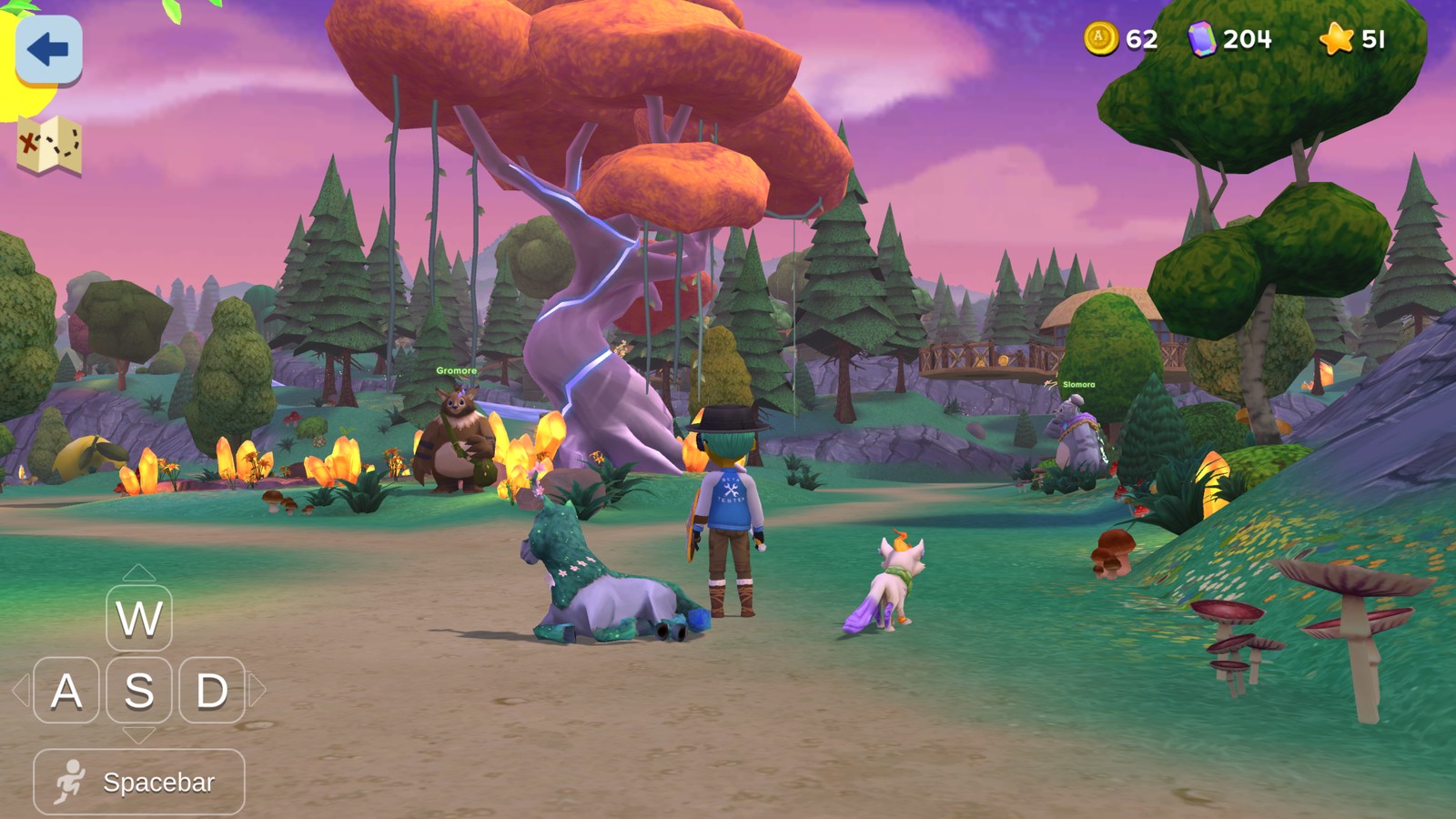
Players complete quests to find stars, which heal the Starwillow tree.
The mechanics. Players collect and battle Intellipets in turn-based knowledge battles across the game's four core subjects (Math, ELA, Science, and History), each mapped to one of four elemental types. Correct answers determine the attack; a Boost button surfaces a short instructional video when a player doesn't know one, folding remediation directly into the moment of failure instead of after it.
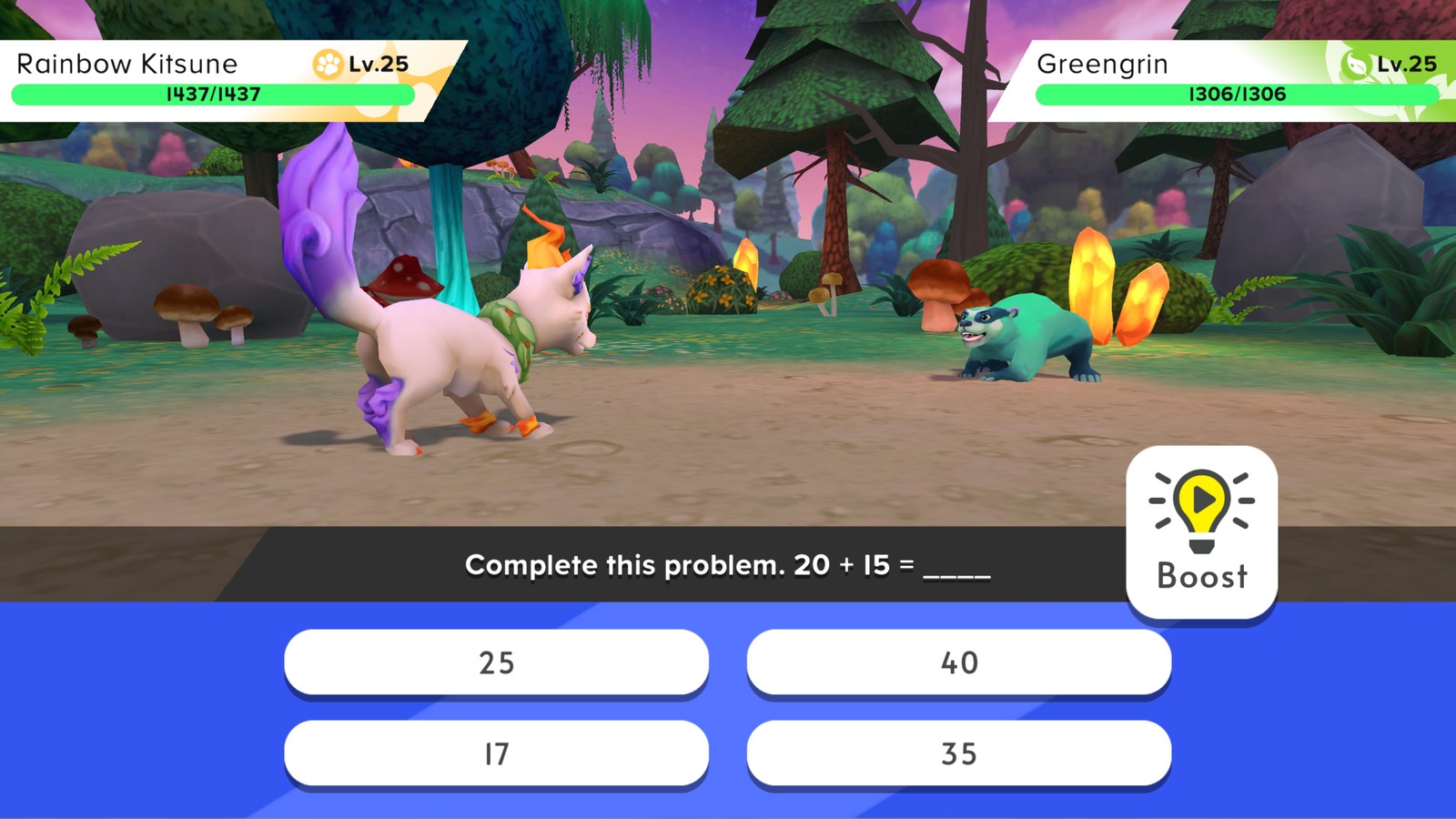
Knowledge battles test players across Math, ELA, Science, and History.
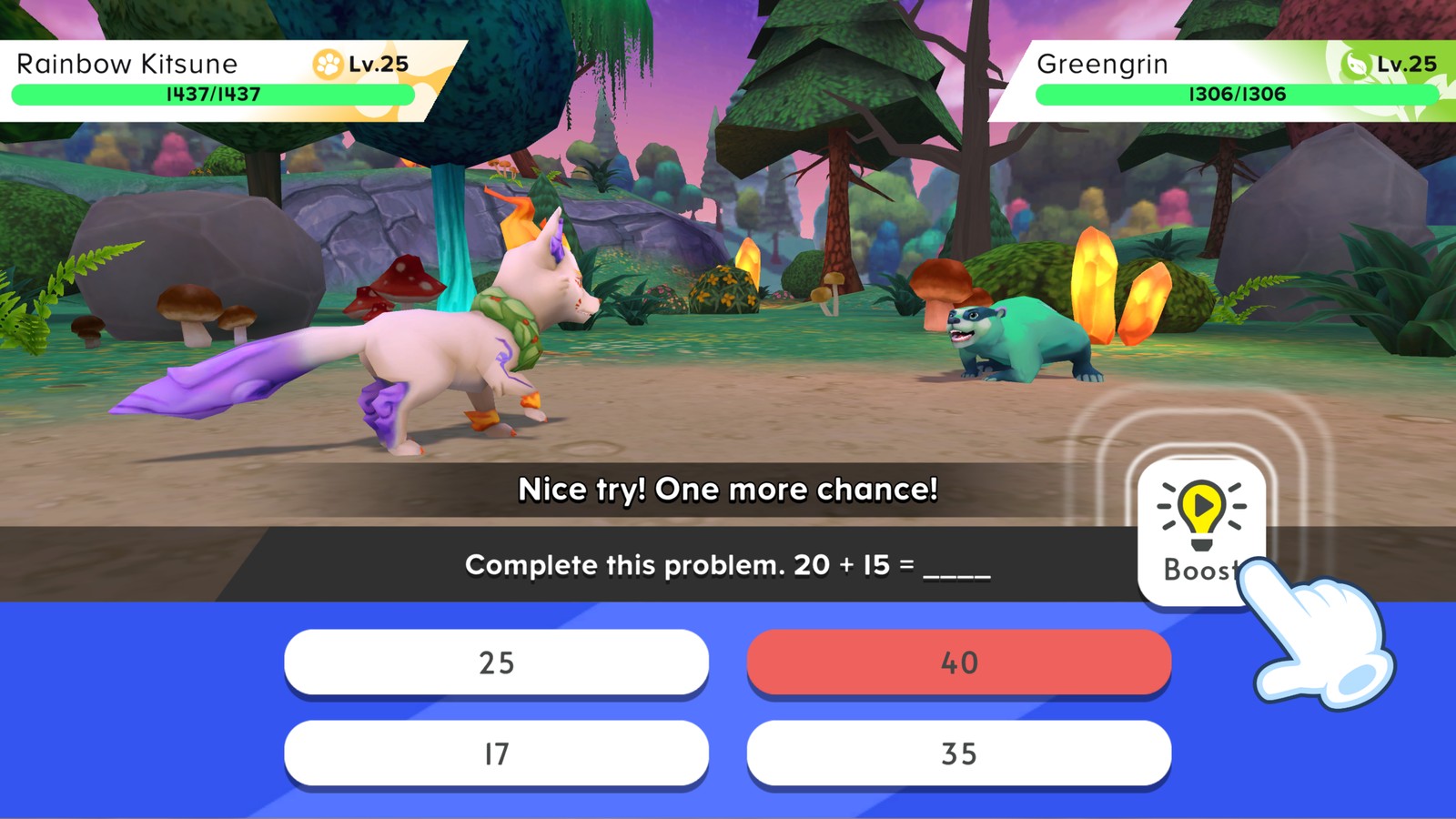
Stuck on an answer? The Boost button surfaces a short video on the concept.
Level design. I owned final level design, all quests, and NPC dialogue for the zone. Content included hidden stars, stars gated behind the new platforming movement, and stars gated behind battles, including mid-boss and final boss encounters. Coins were placed throughout the map as a planned economy sink, but the shop meant to spend them on never got built, for the same reason pets couldn't transfer over: there was no bridge between this zone's systems and the rest of the game. Coins did serve a valid purpose, to guide the player around a brand new world that included verticality, something they had not yet experienced in Adventure Academy.
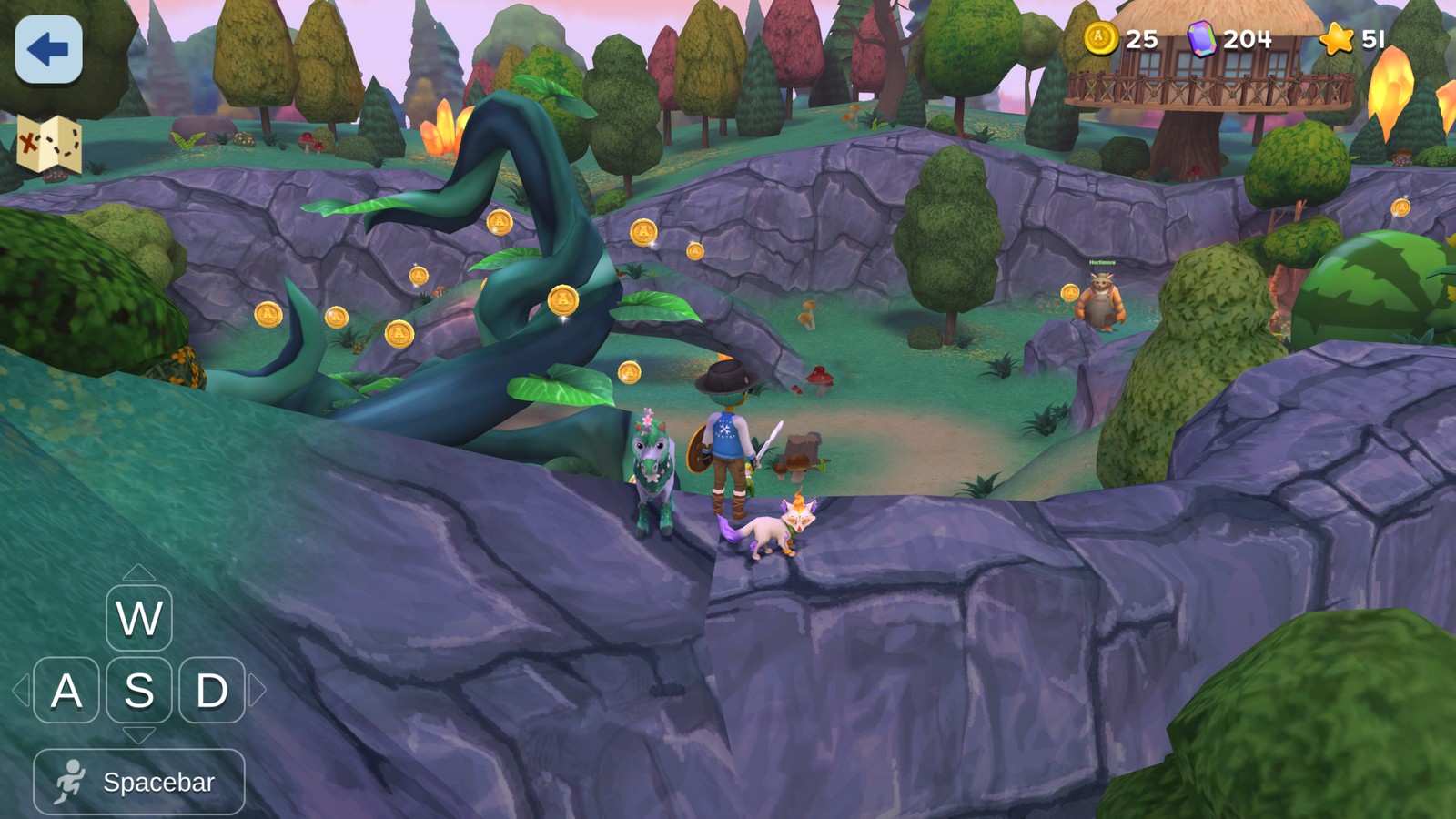
With real 3D physics, players can run, jump, and climb to explore hidden areas.
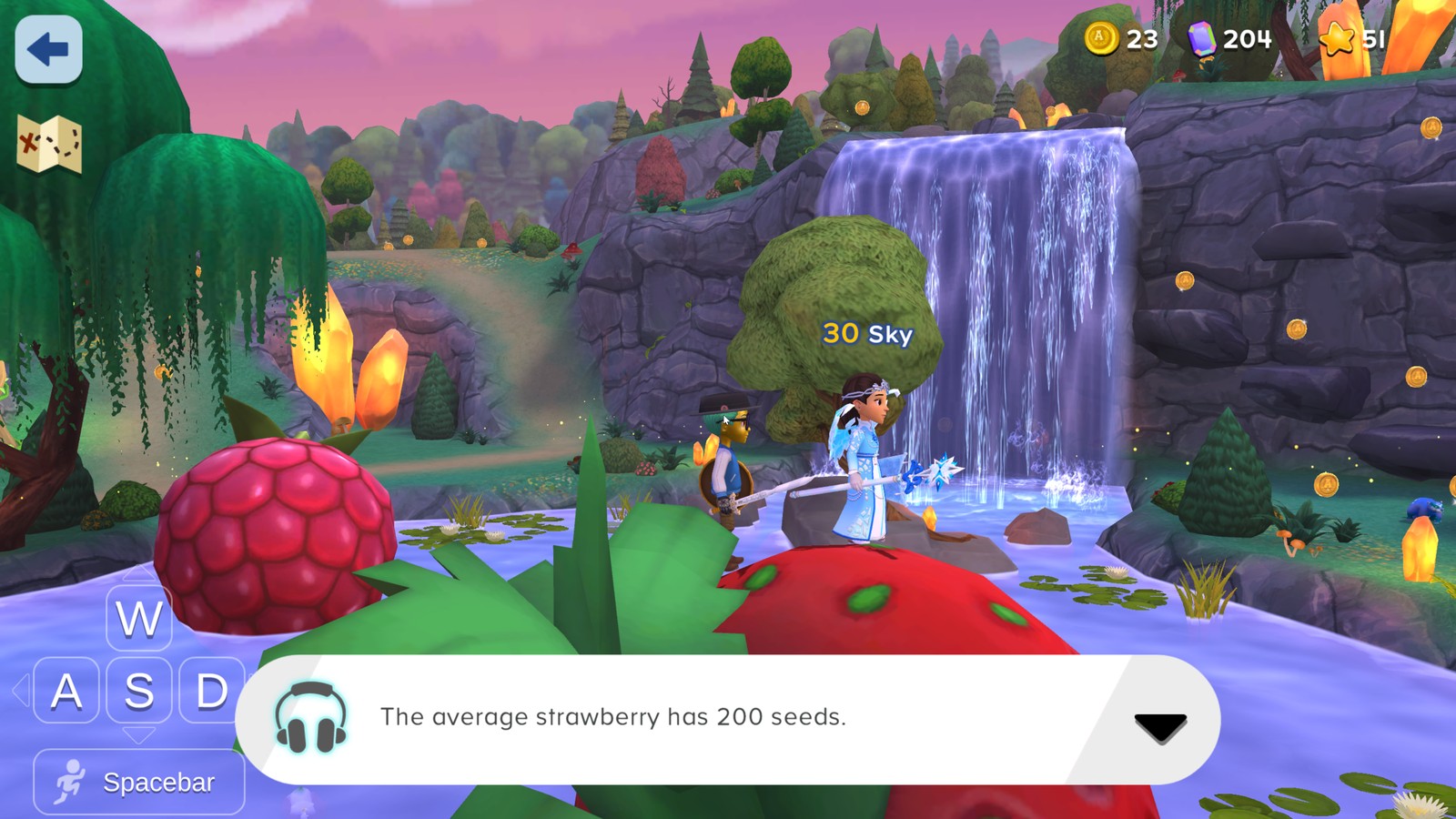
Navigating the zone can trigger audio learning moments along the way.
Every one of those choices was in service of the same goal: prove that education could live inside the core loop, not next to it.
Final Design
The shipped zone: pick a starter Intellipet, explore the Astralands on foot with full 3D movement for the first time in the game's history, and battle wild and rival Intellipets in knowledge battles tied to Math, ELA, Science, and History. Stars are recovered by exploring, platforming, and defeating mid-boss and final-boss encounters, all while restoring the Starwillow tree one piece at a time.
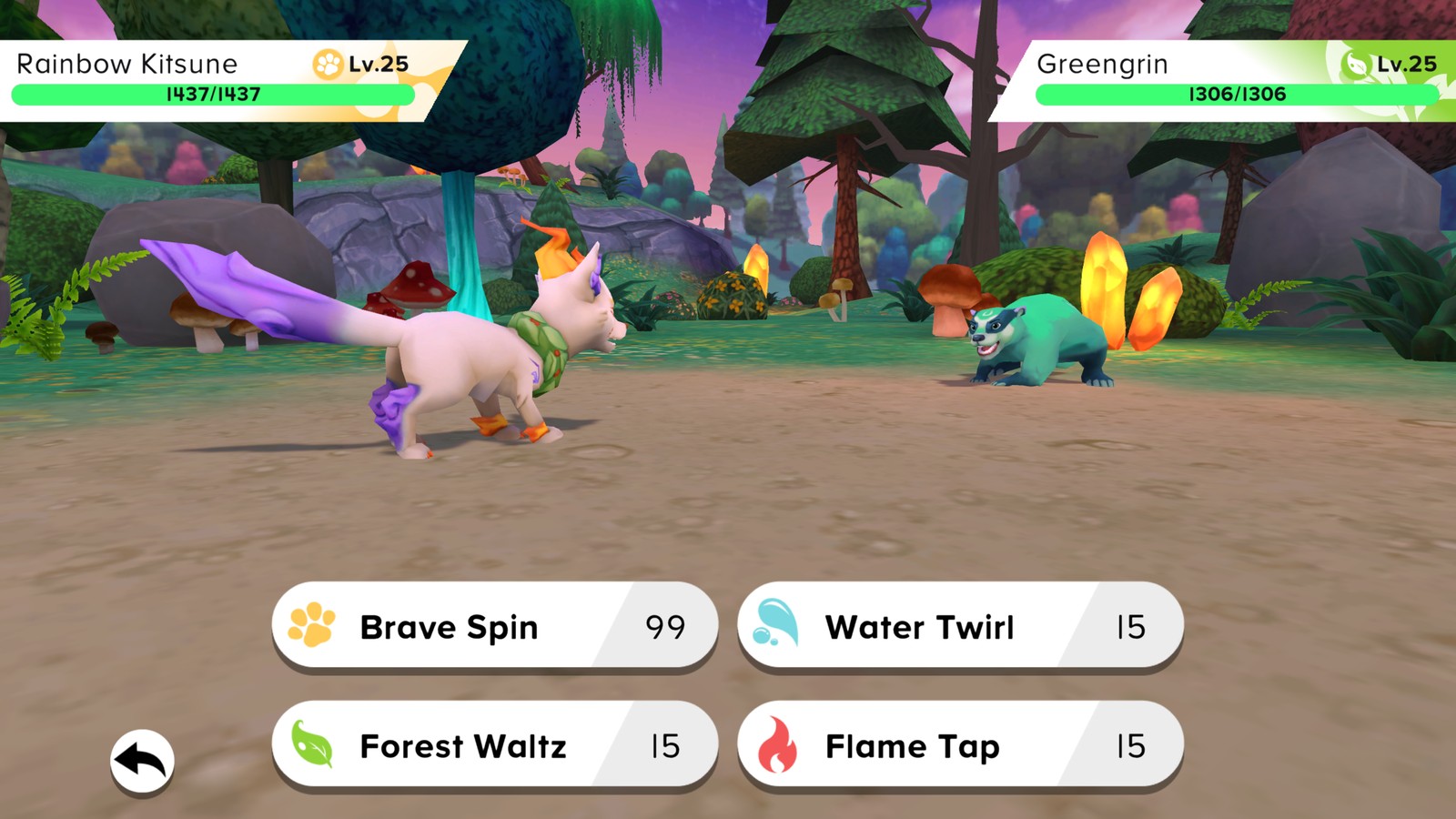
Befriending the Legendary Rainbow Kitsune unlocks all four attack types.
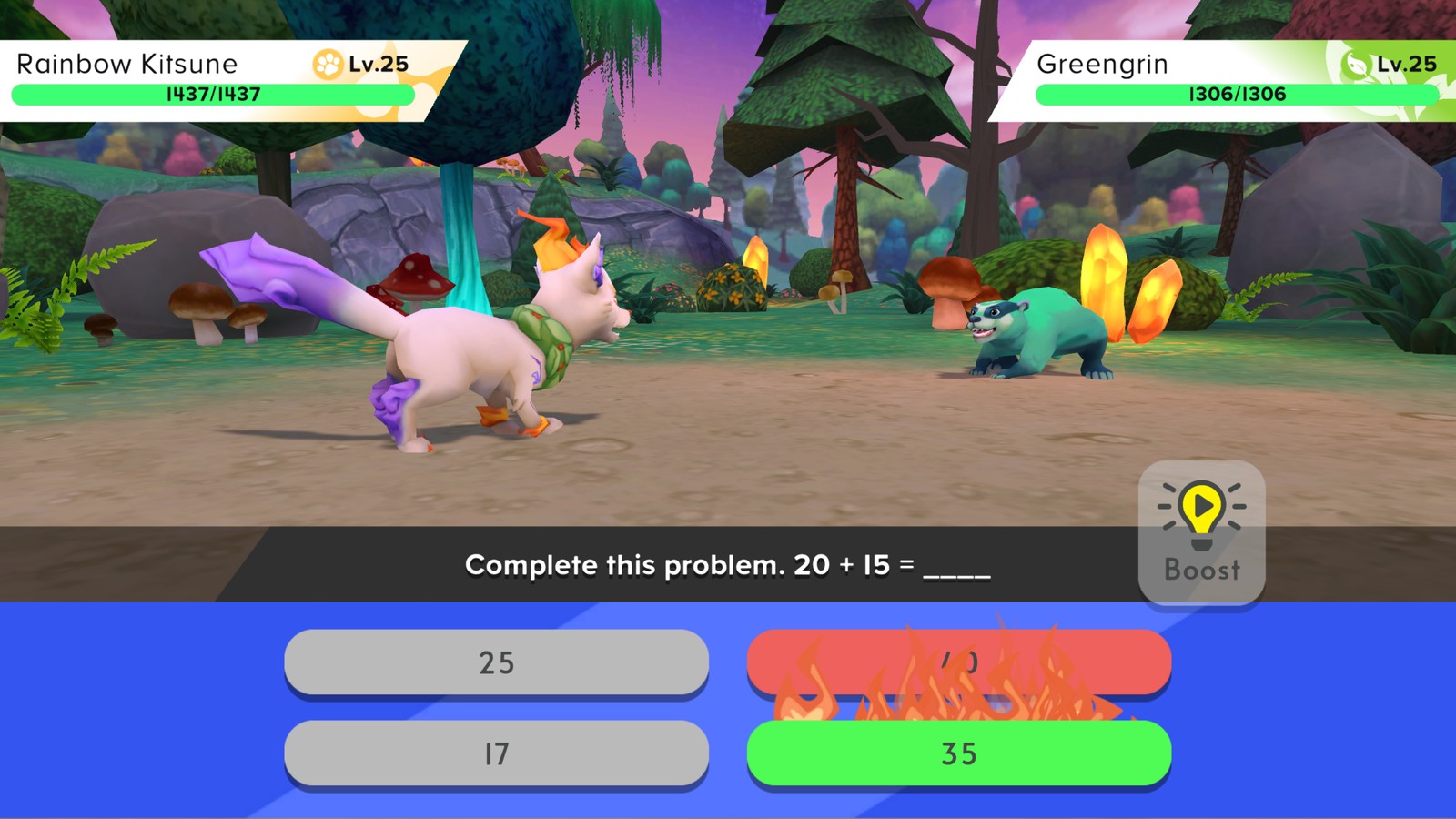
Correct answers highlight the elemental type of the attack used.
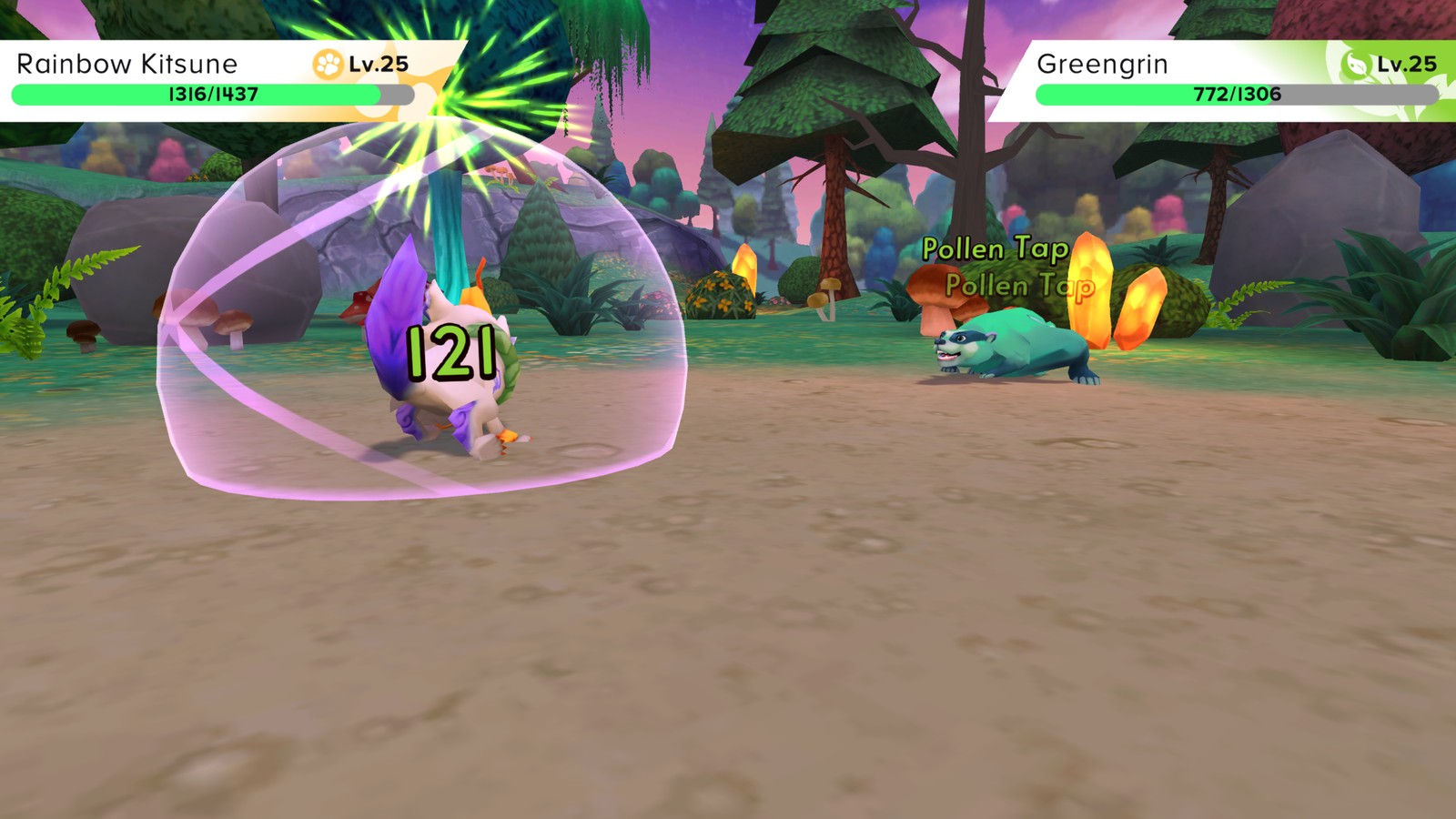
Players can lean on their full party if a battle gets tough.
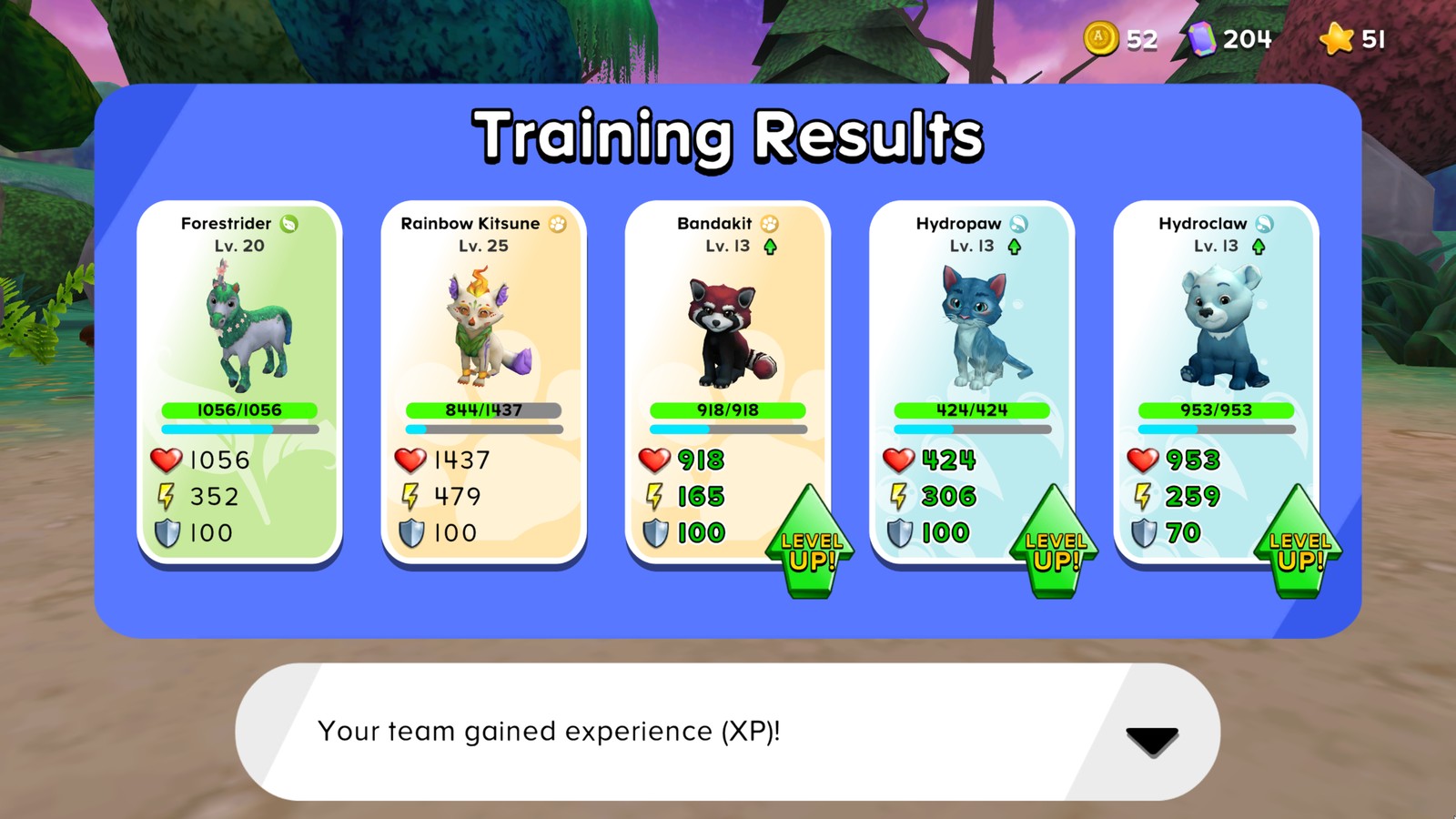
Every battle levels up your pets, unlocking more powerful moves.
Outcome & Impact
- Intellipet Adventures launched as the largest single experience released with Adventure Academy, and the first to use full 3D physics-based movement, players could freely run, jump, and engage in battle for the first time in the game's history.
- An A/B test at launch showed a 9% D1 retention lift.
- The first zone shipped with 50 quests and 3 side-quest branches, built in Unity's Visual Scripting.
Lessons Learned
The real lesson from this project: educational games only work when the learning lives inside the core loop, and that loop has to be the most exciting part of the game, not a rewarded detour from it. The kiosk had genuinely good games in it, but that never mattered. When a new one shipped, most players couldn't find it, and the format cut kids off from the thing they engaged with most, their own avatar, inside a social world they actually cared about.
“The learning has to live in the most exciting part of the game, not next to it.”
Given more time, what I'd chase next is socialization: players could see each other in the zone but couldn't battle together, a gap I'd planned to close in the second expansion before the team was laid off.